


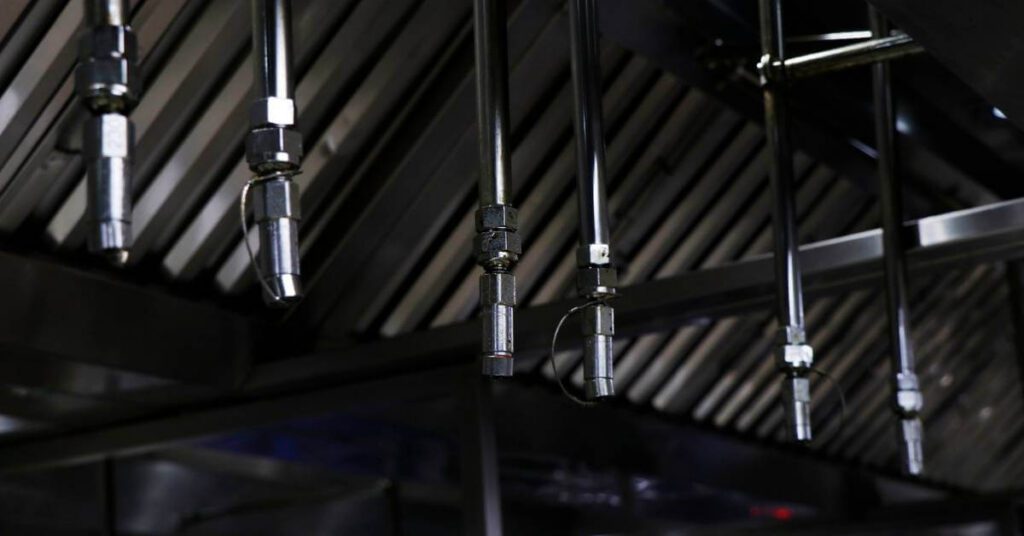
ANSUL kitchen fire suppression systems are widely recognised as one of the most effective ways to protect commercial kitchens from fire. In environments where open flames, high temperatures, and combustible cooking oils are used daily, the risk of fire is significantly higher than in standard commercial premises. An ANSUL system provides fast, automatic fire suppression that helps protect people, equipment, and business continuity.
Whether you operate a restaurant, hotel kitchen, or larger catering facility, understanding how ANSUL kitchen fire suppression systems work is essential for managing fire risk effectively. In this guide, we explore what an ANSUL system is, how they work, and why they’re recommended as part of a compliant fire safety strategy.
What is an ANSUL system?
An ANSUL system is a purpose-designed fire suppression solution created specifically for commercial cooking environments. Unlike standard fire extinguishers, which rely on manual use, an ANSUL kitchen fire suppression system is engineered to automatically detect and suppress fires at their source, often before they can spread.
An ANSUL system consists of several key components working together, including:
- Agent tanks (or cylinders) – these contain a wet chemical extinguishing agent that is designed to tackle cooking oil and grease fires.
- Detection lines or fusible links – these are installed above cooking appliances and respond to excessive heat.
- Discharge nozzles – these are strategically positioned above fryers, grills, hobs, and within extractor hoods and ductwork to discharge the extinguishing agent.
- Control mechanisms – these are what activate the system automatically or manually.
- Fuel shut-off interfaces – this automatically cuts off gas or electric cooking equipment once the system has been activated.
The wet chemical agent used in ANSUL fire suppression systems works by cooling the fire and forming a soapy foam layer that prevents re-ignition. This makes ANSUL systems particularly effective for kitchen fires, where grease and high temperatures can cause fires to flare back up if not properly suppressed.
How does an ANSUL fire suppression system work in a kitchen?
An ANSUL kitchen fire suppression system is designed to respond rapidly and reliably in high-risk kitchen environments. The process typically follows three key stages: detection, activation, and suppression.
First, heat detection occurs through a network of detection lines or fusible links installed above cooking appliances. When temperatures exceed safe limits, the detection system triggers the release mechanism.
Once activated, the system immediately shuts off the fuel supply to the affected equipment. This is a critical step, as removing the heat source helps prevent the fire from continuing to burn or reigniting after suppression.
The system then discharges a wet chemical extinguishing agent through strategically positioned nozzles. These nozzles ensure the agent is applied directly to the fire risk areas, including cooking surfaces, grease filters, and extractor ducts. The agent rapidly suppresses flames, cools hot surfaces, and creates a protective barrier to stop the fire from reigniting.
Because the entire process is automatic, ANSUL fire suppression for kitchen environments provides protection even when staff are not present or when a fire occurs outside of normal operating hours.
Where are ANSUL kitchen fire suppression systems typically installed?
ANSUL systems are commonly installed in environments where commercial cooking presents a significant fire risk. Some typical places you might find these include:
Commercial kitchens
High-volume kitchens using fryers, grills, ranges, and solid fuel appliances benefit from the fast-acting protection provided by an ANSUL kitchen fire suppression system.
Restaurants and cafés
Busy food service environments face constant exposure to grease and heat. ANSUL systems help protect staff, customers, and premises while reducing the risk of lengthy closures following a fire incident.
Hotel kitchens
Hotels often operate kitchens for extended hours and serve large numbers of guests. Fire suppression systems help maintain guest safety and protect the wider building, including accommodation areas above or adjacent to kitchens.
School or care home canteens
In educational and care settings, kitchens must meet strict safety standards to protect vulnerable occupants. ANSUL kitchen fire suppression systems provide reassurance that fire risks are being managed effectively.
These systems are suitable for both new-build kitchens and existing facilities, and can be tailored to the specific layout and equipment used within each environment.
What are the benefits of installing an ANSUL kitchen fire suppression system?
Installing an ANSUL kitchen fire suppression system offers several benefits for commercial kitchens including:
- Rapid fire suppression – the system activates automatically to control or extinguish fires in their early stages, which significantly reduces the risk of escalation.
- Protection for staff and customers – by cutting off fuel supplies and suppressing flames quickly, the system helps reduce exposure to smoke, heat, and fire.
- Minimised damage to equipment and property – early suppression limits damage to cooking appliances, extractor systems, ceilings, and nearby areas, ultimately saving on costly repairs.
- Reduced downtime and business disruption – quick fire control helps prevent lengthy closures and allows kitchens to resume operations sooner, which minimises revenue loss.
How does an ANSUL system demonstrate compliance with legal requirements?
While fire suppression systems are not always explicitly mandated by law, ANSUL kitchen fire suppression systems are often recommended as part of a compliant fire safety strategy.
Under the Regulatory Reform (Fire Safety) 2005, the ‘responsible person’ must identify and manage fire risk through a suitable and sufficient fire risk assessment. In commercial kitchens, this assessment frequently identifies cooking processes and grease fires as high-risk hazards.
Installing an ANSUL fire suppression system for kitchen environments demonstrates that appropriate measures have been taken to control these risks. Suppression systems are also commonly expected by insurers, particularly in hospitality and catering settings, and may be a condition of cover.
ANSUL systems also support compliance by working alongside other fire safety measures such as fire alarms, emergency lighting, and fire doors. When properly installed and maintained, they form an integral part of a layered fire protection strategy.
Is an ANSUL kitchen fire suppression system right for your environment?
If you’re wondering whether an ANSUL kitchen fire suppression system is suitable for your premises, here are some key considerations to keep in mind:
- Types of cooking equipment – if your kitchen uses deep fat fryers, grills, open flames, or high-heat cooking appliances, the fire risk is elevated.
- Volume of food preparation – busy commercial kitchens with high output are more prone to equipment overheating and grease buildup, which increases the potential for a fire.
- Grease and vapour levels – kitchens that produce high grease vapours or lack advanced ventilation systems are a higher risk.
- Occupancy and environment – settings like restaurants, hotels, care homes, or schools with high or vulnerable occupancy require faster, automatic protection against fire.
- Business continuity concerns – if downtime from a fire would cause serious financial or reputational damage, investing in a reliable suppression system is crucial.
- Findings in your fire risk assessment – if your fire risk assessment highlights cooking areas as a key hazard, installing an ANSUL system may be essential for legal compliance and safety.
If you’re unsure whether an ANSUL system is right for you, you can speak to one of our qualified and competent fire safety providers who can advise and assess your kitchen layout, equipment, and operational risks to determine whether ANSUL fire suppression is the most suitable solution.
Speak to our experts today about ANSUL kitchen fire suppression systems
ANSUL kitchen fire suppression systems provide reliable, automatic protection for some of the highest-risk environments in commercial fire safety. From rapid fire suppression to improved compliance and reduced downtime, they play a vital role in protecting people and property.
We’re part of the LS Fire Group, which means we can design, install, service, and maintain ANSUL fire suppressions systems for kitchens across the UK from a wide range of sectors thanks to the help of our partner brands.
If you’d like expert advice on whether an ANSUL system is right for your premises, or you need support with installation or servicing, get in touch with us today. We’re here to help protect your kitchen, your people, and your business.
ANSUL kitchen fire suppression system FAQs
- How does an ANSUL system work in a kitchen fire?
- An ANSUL system is designed to detect and suppress fire automatically in commercial kitchens. Heat-sensitive detection lines activate the system when unsafe temperatures are reached, triggering the release of a wet chemical extinguishing agent through strategically placed nozzles. At the same time, the system isolates the fuel supply by shutting off gas or electricity. This rapid response cools the fire, suppresses flames, and prevents re-ignition, helping to contain the incident before it can spread.
- Is an ANSUL fire suppression system required in a commercial kitchen?
- An ANSUL fire suppression system is not legally mandatory in every commercial kitchen; however, it is frequently recommended following a fire risk assessment where cooking processes present a high fire risk. Kitchens using deep fat fryers, open flames, or producing significant grease vapours are often expected to have suitable suppression systems in place. Insurers and enforcing authorities may also require fixed fire suppression as part of their safety expectations.
- How often should an ANSUL kitchen fire suppression system be serviced?
- ANSUL kitchen fire suppression systems should typically be serviced at least every six months by a qualified and competent engineer. Regular servicing ensures all components – including detection lines, cylinders, nozzles, and activation mechanisms – are fully operational and compliant with manufacturer guidelines and relevant fire safety standards. Ongoing maintenance is essential for system reliability and legal compliance.
- Can an ANSUL system be retrofitted into an existing kitchen?
- Yes, an ANSUL system can be retrofitted into most existing commercial kitchens. The system can be designed around your current layout and cooking equipment, allowing you to upgrade your fire protection without major structural changes. A professional assessment by one of our fire safety specialists will determine the most effective configuration to ensure full coverage and compliance.